What's in this lesson
This lesson traces the evolution of AI from standalone language models to today's intelligent, interconnected agent ecosystems. We'll explore RAG, tool use, multi-agent logic, MCP, and reasoning models.
Why this matters
Understanding how AI has evolved provides the context for why modern systems are built the way they are. This holistic view prepares you to build and interact with the next generation of intelligent systems.
Before we begin...
What do you think is the biggest limitation of modern AI models (like ChatGPT) without agentic architecture?
The Agentic Timeline
Scrub the timeline to see how AI capabilities have expanded over the last few years.
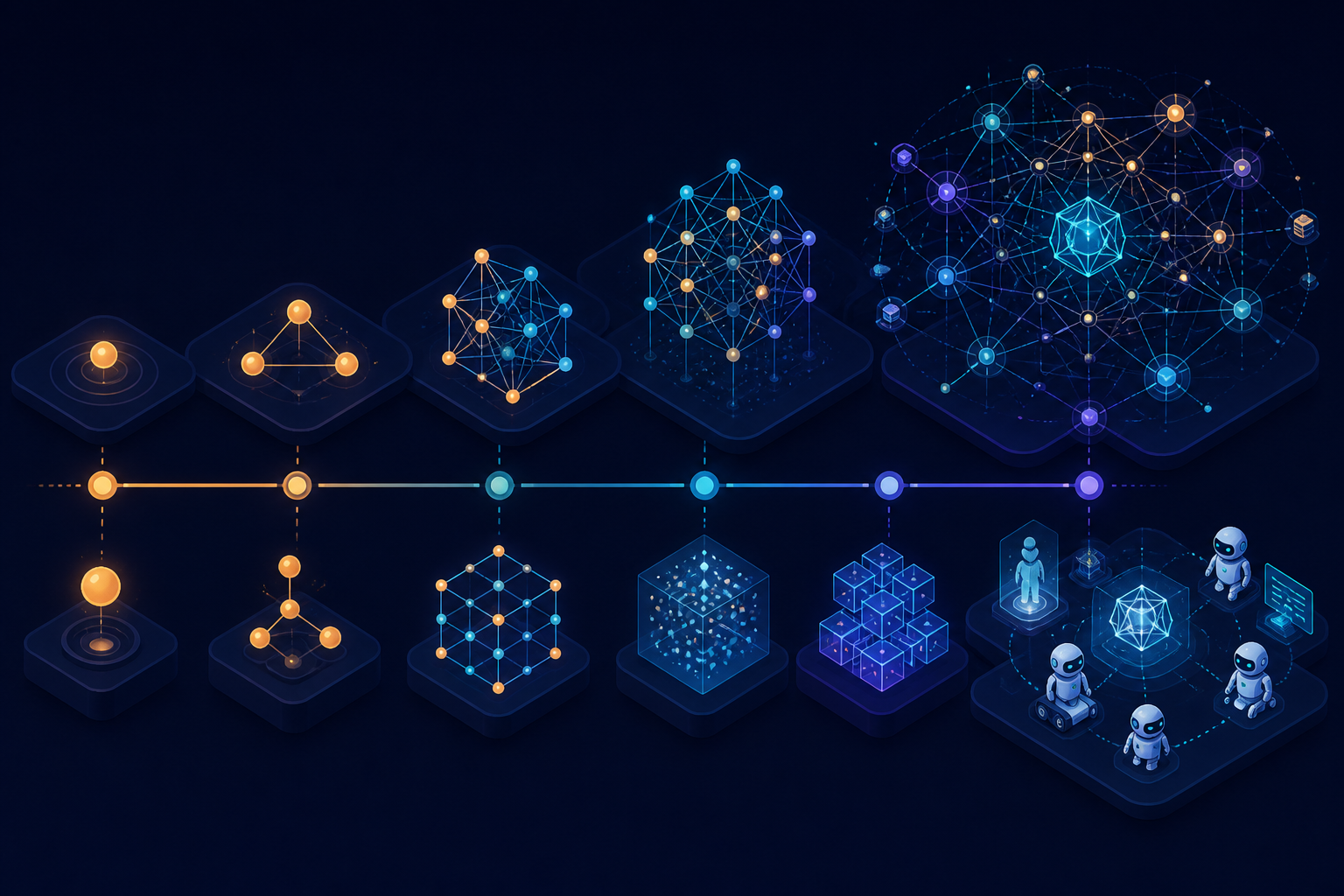
1. The Standalone LLM Era
Large Language Models like early GPT-3 operated in a vacuum. They generated impressive text, but were limited to their training data. They had no memory, no internet access, and no tools. They were isolated brains in jars.
2. Retrieval-Augmented Generation (RAG)
To fix hallucinations and data cutoff limits, we gave LLMs "books" to read. RAG allows models to fetch relevant documents from a database before answering. The brain was no longer isolated; it had a library.
3. Tool-Augmented AI
Reading wasn't enough. We gave models hands. Through APIs, LLMs could search the web, execute code, query databases, and send emails. The system went from "read-only" to "read-write".
4. Multi-Agent Ecosystems
Today, multiple specialized agents collaborate. A "research agent" gathers data, passes it to a "coding agent", which is reviewed by a "QA agent". They plan, execute, and evaluate their own work autonomously.
The Context Window Dilemma
As agents handle more complex tasks, they need memory. We can either increase the context window (how much text the model sees at once) or use advanced RAG to only fetch what's needed.
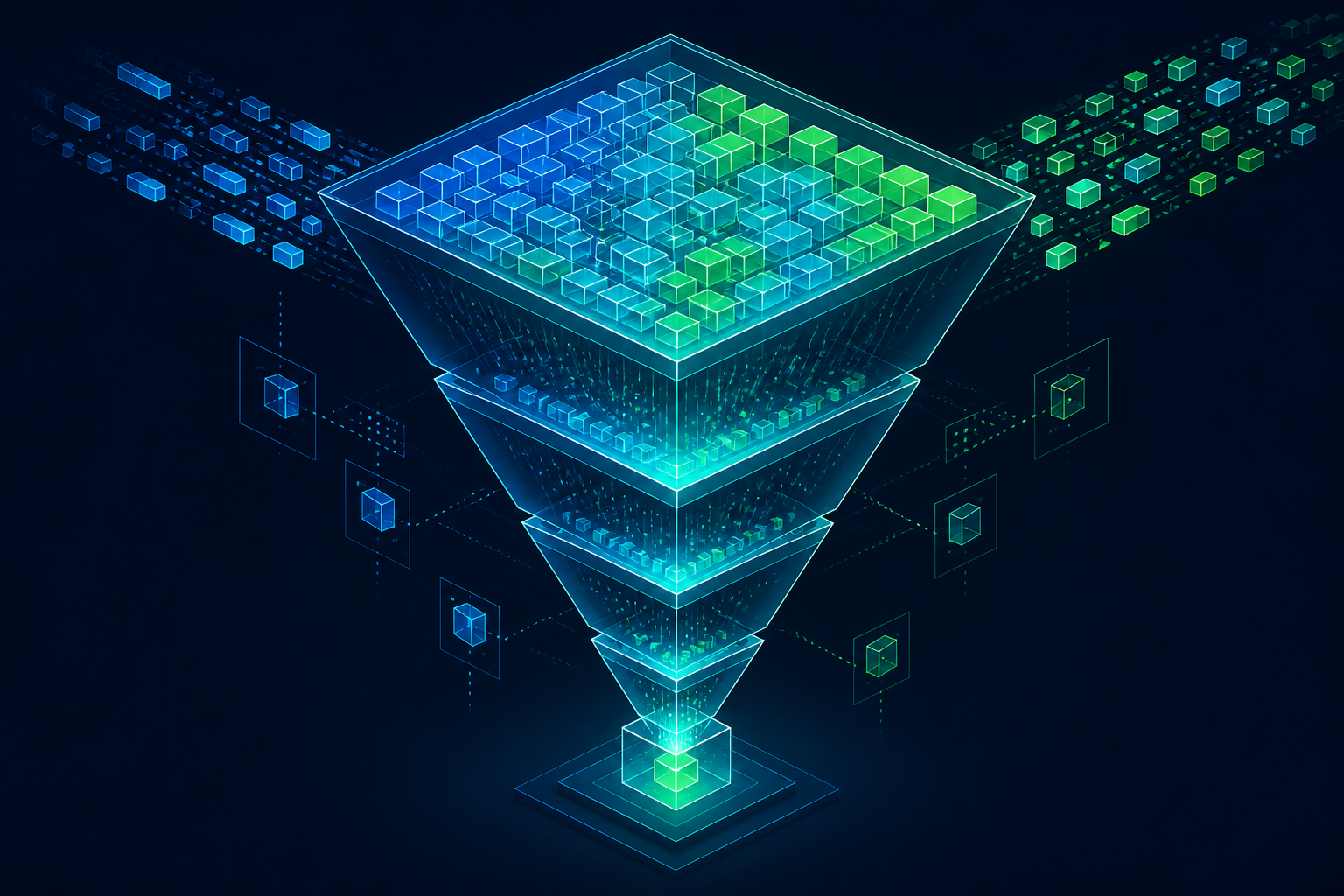
Use the slider to see the trade-offs of massive context windows.
Context: 8,000 Tokens
Fast, cheap, but limited reasoning space.
Knowledge Check: Core Concepts
Match the architectural leap with its definition by clicking a term on the left, then its match on the right.
The Shift to Reasoning Models
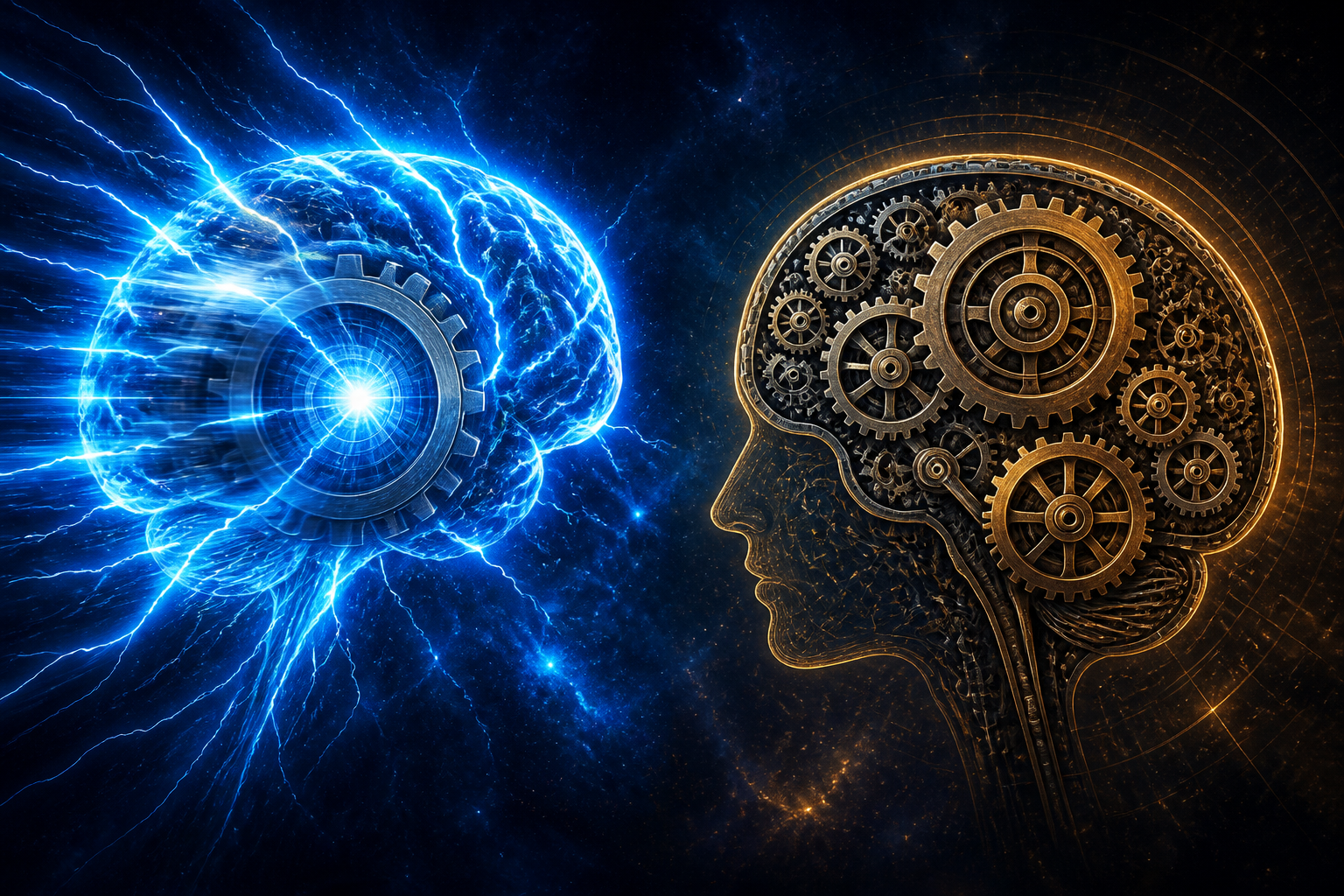
For a long time, AI operated purely in what psychologists call System 1 mode: fast, intuitive, pattern-matching generation. You ask a question, it predicts the next word instantly.
Modern agentic workflows demand System 2 logic: slow, deliberative reasoning. This shift was marked by "Chain of Thought" prompting, and later by models explicitly trained to "think" before they speak (like OpenAI's o1 series).
In an agent ecosystem, System 2 models act as the orchestrators—planning the mission and evaluating the results—while smaller, faster System 1 models execute the sub-tasks.
The Modern Agentic Stack
Click the highlighted nodes on the architecture diagram to understand the layers of a modern agent.
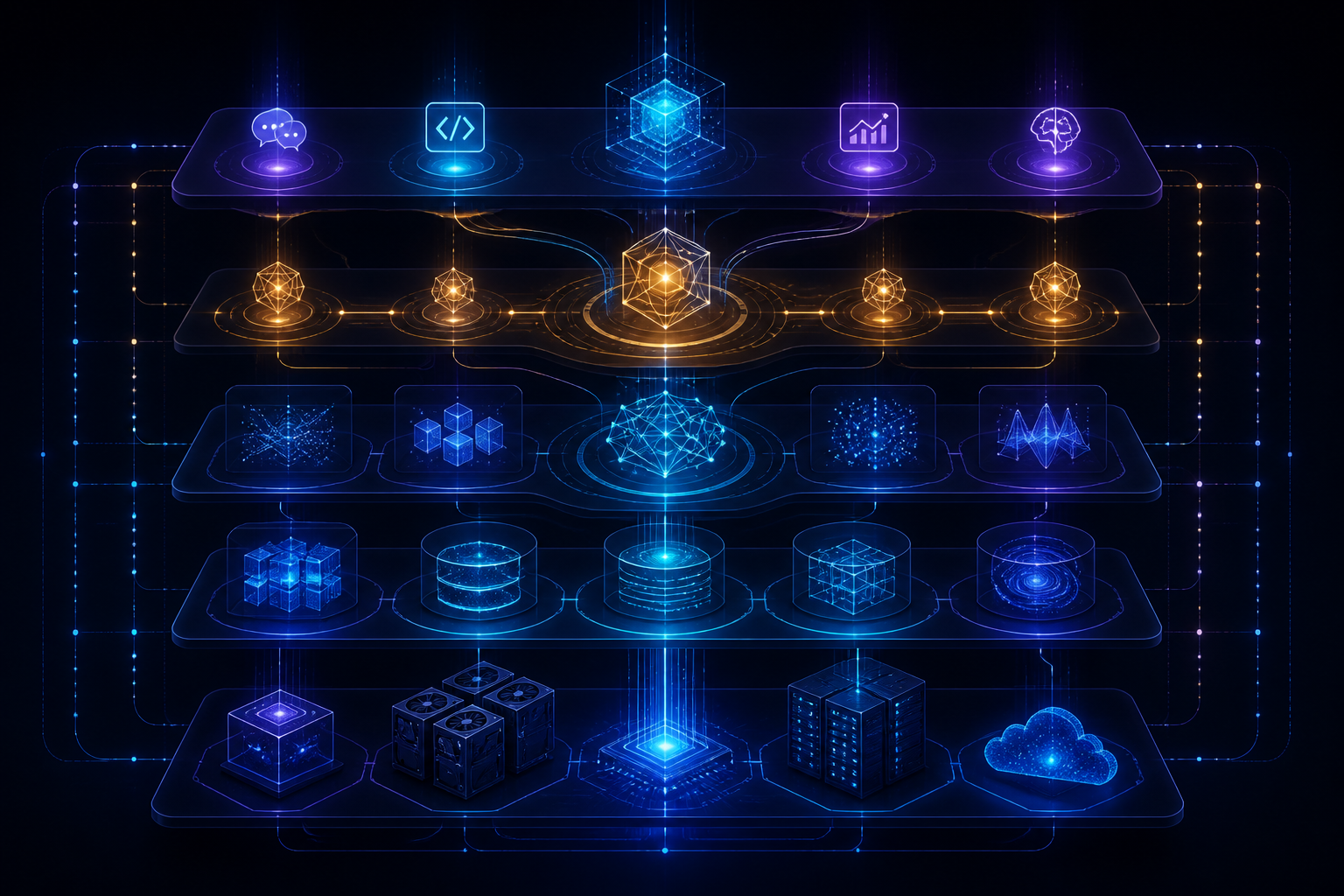
🧠 The Model / Logic Layer
The "brain" of the agent. This layer handles reasoning, planning (like ReAct or Plan-and-Solve), and parses user intents. It decides what to do next based on the current context.
Interoperability: The Next Frontier
Agents are scaling from isolated scripts to operating systems. This requires standardization across platforms and services.
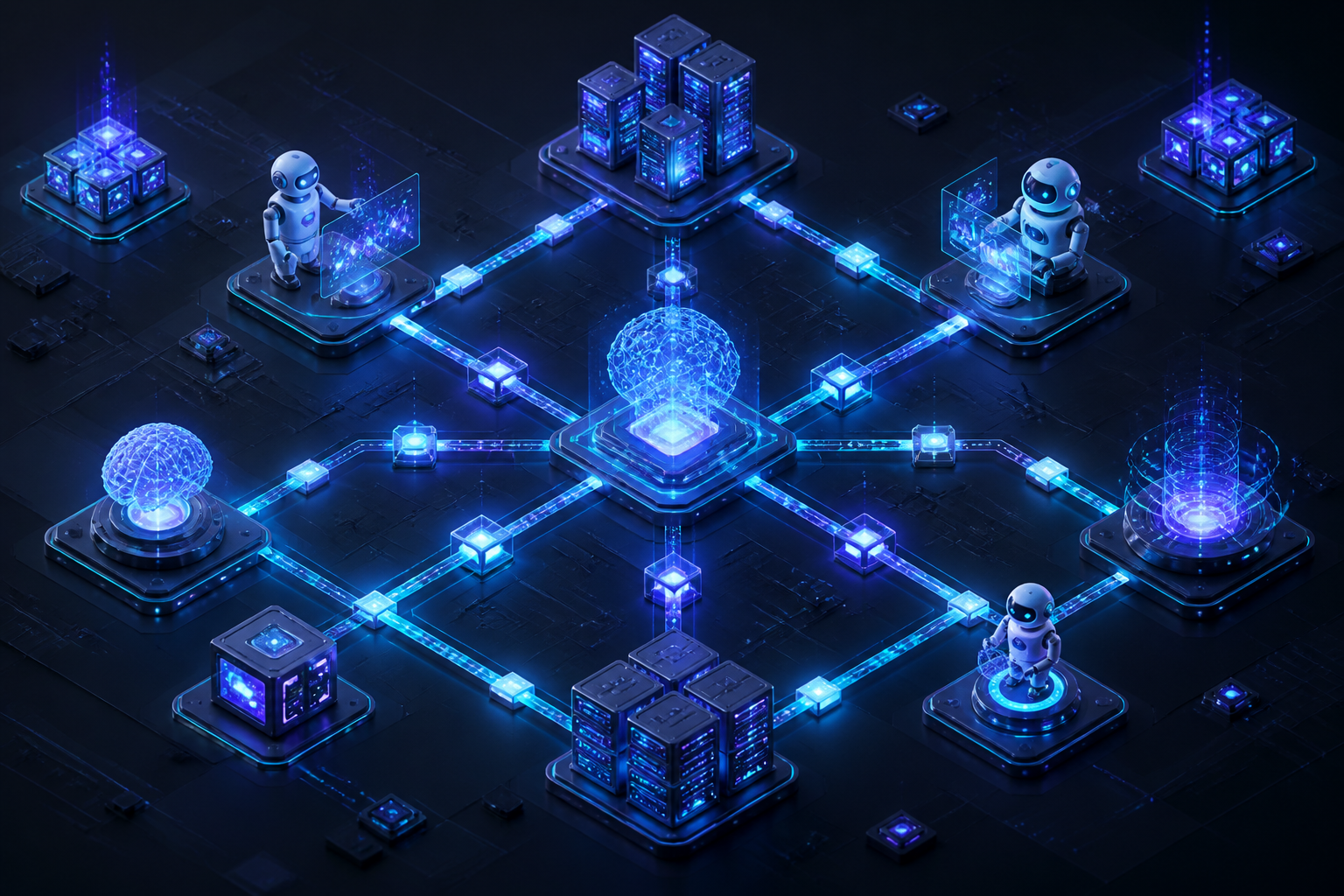
Click the cards below to reveal how this is achieved:
Knowledge Check: Evolution Order
Drag and drop the items to sort the evolution of AI capabilities from oldest (top) to newest (bottom).
- 3 Tool-Augmented Action
- 1 Standalone Prompted LLM
- 4 Multi-Agent Networks
- 2 RAG (Retrieval-Augmented Generation)
Key Takeaways
- Evolution: AI has shifted from standalone text generators to interconnected agents that perceive, reason, and act.
- Memory vs. Context: RAG efficiently retrieves needed data, while larger context windows allow for mass ingestion, both serving the agent's memory layer.
- Reasoning: System 2 (slow, deliberative) logic is critical for autonomous planning and orchestration.
- The Stack: Modern agents require layered infrastructure: Logic, Memory, Tools, and Interoperability.
- Interoperability: MCP and A2A protocols are paving the way for standard AI Operating Systems where multiple agents collaborate seamlessly.
Assessment
You're about to take the final assessment. There are 5 questions covering the architectural evolution, RAG, tool use, reasoning shifts, and multi-agent systems.
You need an 80% to pass. Good luck!
Question 1 of 5
What is the primary purpose of Retrieval-Augmented Generation (RAG)?
Question 2 of 5
What distinguishes a true "Agent" from a simple standalone LLM?
Question 3 of 5
What does the Model Context Protocol (MCP) primarily enable?
Question 4 of 5
Which psychological model of thinking is associated with "Chain of Thought" reasoning and complex agent orchestration?
Question 5 of 5
In a multi-agent ecosystem, what does A2A communication facilitate?